
The NFL Draft Explained is one of the most anticipated events in professional football, and honestly, people talk about it like it’s basically a holiday for the league. Every single year, NFL teams get together to select the best college football players and add them to their rosters. For fans, the draft brings hope, adrenaline, and that constant chance of discovering the next true superstar who can kinda flip a franchise around.
Even though the NFL Draft can look pretty straightforward from the outside, the rules, the steps, and the overall strategy behind it make it one of the most interesting parts of the whole NFL. Teams often spend months—like real months—watching prospects, breaking down film, and building draft boards, so they can pull ahead of other clubs without wasting their time.
In this guide, we’re going to walk through how the NFL Draft actually works, how the draft order is set, what draft picks really mean, and why the draft continues to be one of the biggest dates on the NFL calendar, year after year.
What is the NFL Draft, anyway?
The NFL Draft is a yearly event where NFL teams pick eligible college football players and some other qualified athletes to join their organizations, yeah.
The main idea is to spread fresh talent across the league in a fairer way and keep that competitive balance thing steady between teams.
Instead of letting players freely choose their teams, the eligible prospects get thrown into the draft and they’re selected by NFL franchises using a set order, already been decided.
It also gives the teams that are struggling a shot to grab top-tier young talent, which, in turn, can raise their odds for future success.
Why Was the NFL Draft Created?
The NFL Draft started in 1936 as a way to make the league feel more level.
Before it existed, the stronger teams often had a huge edge when it came to recruiting talented players. Then it gets kind of rough for the weaker teams to compete week after week.
So the draft system was made to support struggling franchises by giving them first look priority at the best available players.
Even now, the NFL Draft is still one of the league’s most important instruments for protecting competitive balance.
Who Is Eligible for the NFL Draft? Explained.
To actually enter the NFL Draft, players have to meet the eligibility rules set by the league.
Most prospects come to the draft after college football, not right out of high school or anything.
Usually, a player becomes eligible after being out of high school for at least three years, which is the typical timeline.
Prospects can include things like:
- College football stars, of course
- Players from smaller schools
- International football prospects
- Athletes from alternative football leagues
Each year, hundreds of players declare for the draft, hoping to kick off their pro football journey, pretty much.
How many rounds are in the NFL draft?
So, the NFL draft has seven rounds; that’s pretty much the whole thing. Each of the 32 teams gets a pick in every round, yet trades, plus compensatory selections, can change how the final count looks; sometimes it feels a bit messy.
The whole draft kind of breaks down like this
Round 1
In Round 1, teams usually grab the most highly regarded prospects. It’s the “big moment” round, and yeah, that gets all the headlines.
Rounds 2-3
After that, teams keep adding players they think can step in fast. Immediate contributions are the usual goal, not just long-range hopes.
Rounds 4-7
Later rounds are more about depth, developmental upside, and players who can help on special teams. It’s a little less flashy, but it can still turn into gold.
Also, even if first-rounders get all the focus, solid organizations often find real talent in the later rounds, too
How is draft order determined?
Draft order is one of the most important pieces, honestly, it controls who gets the better opportunities first.
In general, it comes down to how teams did in the previous season
Non-playoff teams
Those teams that don’t make the playoffs pick earlier. Typically, the team with the worst record gets the first overall selection.
Playoff teams
Teams that reach the playoffs land later. And the Super Bowl champion ends up with one of the final selections in each round.
This setup lets struggling teams rebuild, while still keeping league parity kind of balanced.
What’s the first overall pick, anyway
The first overall pick is kinda the most valuable selection in the NFL Draft, or at least that’s how it’s usually treated.
The team that ends up with that #1 slot gets the chance to choose the player it thinks is the top prospect on the board.
Over the years, first overall picks have often been guys like
- Elite quarterbacks
- Big-time defensive players
- Talents that can actually change a franchise around them
And yeah, the pressure tied to being the first overall pick is enormous. Teams really expect that player to turn into a foundation piece for the organization, pretty much fast.
What do draft picks mean
A draft pick is basically a team’s opportunity to take a player.
Draft picks are valuable assets because they let teams add young talent without paying the big contract numbers right away, relatively speaking.
Most teams also treat draft picks like longer-term investments , not just short-term moves.
Usually, the “worth” of a draft pick depends on things such as
- Round number, like which stage you’re in
- Where are you sitting in that round
- How strong is the draft class overall
- What the team actually needs at the moment
In general, earlier draft picks tend to be worth more. That’s because they give you access to the most highly rated prospects, and that part matters a lot.
Can Teams Trade NFL Draft Explained Picks?
Yes.
One of the most thrilling sides of the NFL Draft is that teams can swap picks. And not just picks, either.
In general, they can exchange:
- Draft selections
- Current players
- Future draft picks
Trades on draft day usually pop up when teams want to
move upward to snag a very specific player, or swap down a bit so they can collect extra selections. Sometimes it’s also to handle roster gaps, and just fix a couple of spots that feel thin.
These deals can end up reshaping a franchise’s future in a pretty dramatic way.
What Are Compensatory Picks?
Compensatory picks are kinda extra draft selections that the NFL hands out, not the normal ones.
Usually, they show up for teams that lost valuable free agents in the previous offseason, like you know, the market move happened and then the roster got thinner.
In most cases, these picks land somewhere between Rounds 3 through 7, depending on the specific situation and math the league does.
The idea behind compensatory picks is pretty straightforward; they’re meant to help a club rebound after losing talent in free agency.
And often the better-run organizations use those picks in a savvy way, to keep roster depth steady, and stay competitive for the long haul.

How NFL Teams sort out draft prospects
NFL franchises put in a lot of time and money into scouting players before the draft; it’s not casual at all.
In general, their review looks kinda like this, not always in the same order:
College performance stuff
Teams watch game film and dig through stats, you know, the usual, but also the subtle things
NFL scouting combine
Prospects do the physical tests, and then the interview part too
Pro Days
College programs host players, and scouts show up to get a closer read in person
Medical evaluations
They review injury history and think about long-term durability and health
Character check
Organizations look at leadership traits, maturity, and how professional someone actually is
Honestly, every small detail can move, or bump a player’s draft spot, sometimes by a surprising amount.
The Importance of the NFL Draft Explained Scouting Combine
The NFL Scouting Combine is, like, one of the most important pre-draft happenings around.
Prospects who get invited show up for stuff like:
- 40-yard dash
- Bench press
- Vertical jump
- Broad jump
- Position drills
- Team interviews
It gives teams standardized measurements as well as testing data that is easy to compare, which is kind of the whole point.
If someone performs really well, it can raise that player’s draft stock, but if the numbers fall flat, it can bring doubts, even when the story outside the drills is more complicated.
How the NFL Draft Explained Shapes Team Success
Honestly, few things hit as hard for an NFL franchise as the draft.
When a team drafts well, it can flip a struggling season into actual contention.
By selecting elite players, teams can:
- Upgrade the talent pool
- Create roster depth
- Shape next wave stars
- Boost long-term competitiveness
And a lot of championship rosters were built through strong selection decisions plus player development, not just one thing.
In fact, a bunch of Super Bowl champions have been made through smart drafting, and that’s a key factor we cover in our History of the Super Bowl: Champions, Records & Evolution guide.
How the NFL Draft kinda impacts team success
Honestly, a few things hit an NFL franchise harder than the draft.
When a front office nails their picks, it can flip a struggling team into something like a real contender, faster than people expect.
Drafting elite players can help a team in a bunch of ways: they can raise the overall talent level, they can add real depth, they can develop future stars, and they can lock in long-term competitiveness without guessing every offseason.
A lot of championship clubs weren’t just “lucky” either. They were built through top-tier selection and steady player development, which is something we also point out in our History of the Super Bowl: Champions, Records & Evolution guide.
And yeah, a big part of that story is that many Super Bowl champions came up through successful drafting, like a key ingredient in how they built their roster.
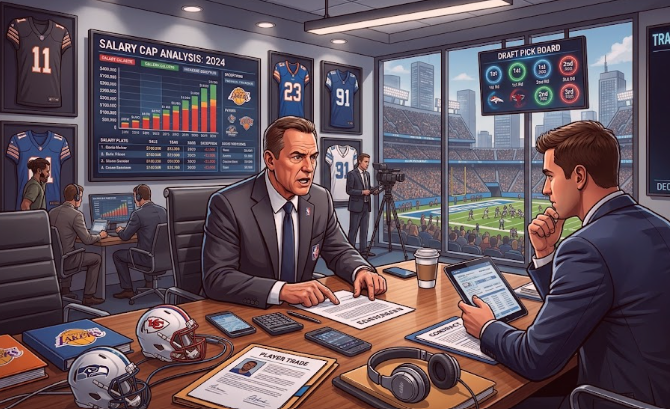
The way the Draft ties into the salary cap
The NFL Draft matters for roster management because rookie deals are usually way more affordable than veteran contracts.
So those younger players can bring real production at costs that are generally easier to handle.
As we note in our NFL Salary Cap Explained: How It Works and Why It Mattersguide, when teams draft well, they can stay competitive while managing their money more smartly, not just spending and hoping.
That budget advantage, it helps successful franchises make more balanced rosters.
Drafting and postseason results
Teams that manage to draft in a steady, smart way usually end up with lasting success, like it just sorta clicks over time.
Top-tier young talent can help a bunch of organizations, maybe not instantly, but still, in the end:
- Take division titles home
- Make it to the playoffs
- Stand a real chance at championships
When a team builds a talented roster through the NFL Draft, it often leads to bigger postseason efforts, and that’s what we cover in our How NFL Playoffs Work: Complete Guide for Beginners.
Good drafting lays down the “base layer” for progress you can keep, not just a quick season moment.
Greatest NFL Draft Picks of All Time
The NFL Draft has kinda produced a lot of legendary players over the years.
Like, some of the best draft picks in league history include a few names that basically still get talked about today, Tom Brady, Jerry Rice, Joe Montana, and Reggie White.
Tom Brady
He was taken in the sixth round, and then somehow Brady turned into one of the all-time greats in the NFL.
Jerry Rice
Most people seem to call him the greatest wide receiver ever, period.
Joe Montana
A multi-time Super Bowl champ, and you know… a Hall of Fame quarterback too.
Reggie White
Just one of those dominant defensive forces in football history, not really like any other.
These examples kinda show that talent can pop up from any round, even if it sounds unlikely at first.
Biggest NFL Draft Busts
Still, not every player who goes high ends up meeting the hype.
Some prospects run into trouble from
- Injuries,
- poor form
- scheme, match problems, and
- off-field complications
And yeah, that uncertainty is part of why the NFL Draft Explained stays so interesting. Even the best scouts, they can’t fully see the future every single time.
Why Fans Love the NFL Draft
Fans love the NFL Draft because it’s basically about what comes next.
They enjoy things like
Hope
Every team gets a chance to upgrade, and that matters.
Surprise picks
When someone gets taken that nobody expected, it creates instant drama.
Trades
Trade day stuff makes it more chaotic and harder to predict.
Future stars
You get that first view at players who might turn into franchise cornerstones.
So, the draft brings optimism and excitement for basically every fan base, no matter where you’re watching from.
Frequently Asked Questions
How many rounds are in the NFL Draft?
There are seven rounds total in the NFL Draft.
Who gets the first pick in the NFL Draft?
Usually, the franchise with the worst record from the previous season gets the first pick overall.
Can teams trade draft picks?
Yes, teams often swap draft selections before and also during the draft itself.
What are compensatory picks?
Compensatory picks are extra draft selections that get handed out to teams who lose particular free agents.
Why is the NFL Draft so important?
The draft helps teams grab fresh talent, upgrade their rosters, and plan for better long-term results.
Final Thoughts
The NFL Draft is way more than just some player-picking thing. It feels like a big deal for team building, competitive balance, and the long-term wins in professional football. With careful scouting, strategic planning, and that kind of smart decision-making, teams use the draft as a path to find future standouts and to strengthen their organizations, sometimes quietly.
Whether you’re brand new to the sport or you’ve been following football for years, learning how the NFL Draft works gives you a real perspective on how teams assemble championship rosters. From the top overall selection to those late-round hidden gems, each pick carries the chance to steer the future of the NFL, and yeah, it can be a little surprising, too.