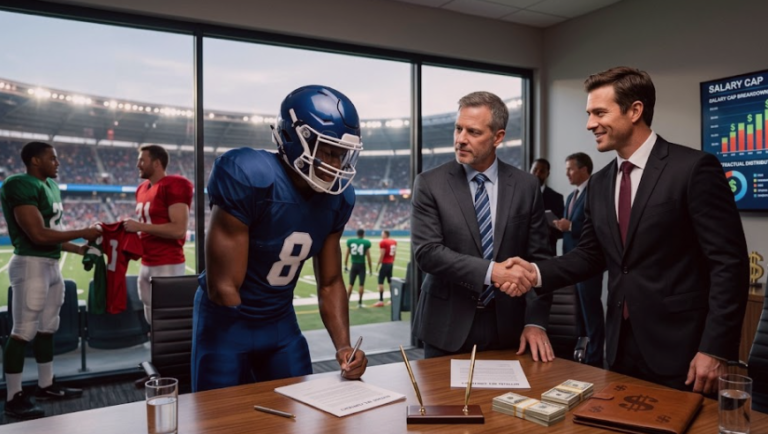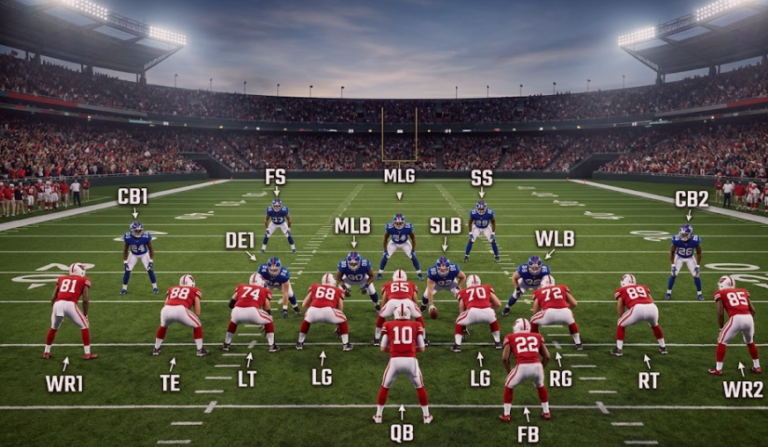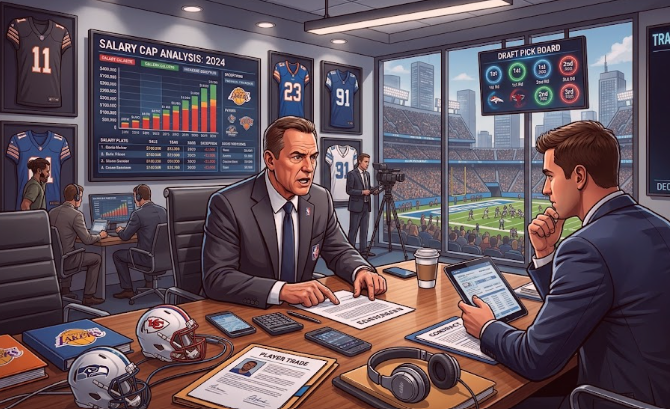

The National Football League (NFL) is famous for its exciting games, passionate fans, and strategic team-building. NFL Trades Explained is an important topic for anyone looking to understand how teams strengthen their rosters behind the scenes. While fans usually focus on what happens on the field, many crucial decisions are made off the field as well. One of the most exciting aspects of every NFL season is player trades, where teams exchange players, draft picks, or other eligible assets to improve their chances of success.
This NFL Trades Explained guide will help you learn more about the NFL trading process, the reasons for making them, the regulations of trade, and their influence on the future of franchises. Whatever your level of knowledge of American football, this guide will provide you with enough information about trading processes in the NFL.
If you’re new to American football, start by reading our Complete Guide to NFL Rules for Beginners before learning how player trades work.
What Are NFL Trades?
A NFL trade refers to a deal among at least two teams involving the exchange of players or other eligible assets. It helps teams add value to their roster, compensate for any weaknesses, gain salary cap room, and plan for the future.
As opposed to free agents signing a contract with a new team when their current contract comes to an end, trades involve players who are currently on another team’s payroll.
After approval from the NFL, the player becomes a member of the new team.
What Are the Reasons for NFL Player Trades?
Each NFL team has various goals during the year, which can be accomplished through trades.
Among the most common motivations, one could mention:
Making the Team Better
The playoff contending team may trade for an experienced player who can play a crucial position for the squad.
If the team needs to improve the protection of its quarterback, the trade for an experienced offensive lineman will occur before the trade deadline.
Building for the Future
There are teams whose main idea is to develop younger players instead of winning right away.
In such cases, a team trades older players for:
- Draft picks in the future
- Younger players
- Salary cap room
Learn how future talent enters the league in our Complete Guide to theNFL Draft Explained.
Handling the Salary Cap
In the NFL, teams have to deal with a tough salary cap, which means they cannot pay beyond a certain amount for each contract.
There may be instances where teams exchange contracts that cost them money to:
- Generate room in their salary cap
- Renegotiate their contracts for top players
- Add new free agents
- Increase their budgetary flexibility
Handling the salary cap becomes one of the most significant issues for NFL trades.
Addressing Position Needs
Football is a dangerous game.
If there is any injury to any key player, a team might opt to trade another player who can fill the vacancy immediately.
Instead of waiting for next year, they get a chance to improve their position right away.
When Can NFL Trades Take Place?
NFL teams can trade players for most of the year.
Trading is limited during particular times of the offseason period and even after the trade deadline for the league.
This trade deadline typically comes at about the midpoint of the regular season.
Once the deadline arrives, the team has to wait until the next league year to make further trades.
That is why many teams like to close their trades before the deadline comes.
What Can Be Traded By Teams?
The majority of new fans believe that players are the only things that teams trade.
In actuality, trades in the NFL may consist of various kinds of things.
Teams can trade the following:
- Players
- Draft picks
- Contingent draft picks
- Future draft picks
Unlike certain other professional sports leagues, teams cannot just swap as much money as they like in exchange for players.
Draft picks end up being the most valuable things that are traded in big deals.
NFL Draft Picks
NFL draft picks let teams choose college players who enter the league.
Every year, teams get picks for multiple rounds of the NFL Draft.
Draft picks are valuable to teams since they will be used to select future talents.
For instance:
- A team seeking a championship may trade a first-round pick for a veteran Pro Bowl player.
- At the same time, the team that is in rebuilding mode gets the chance to pick a young player next year.
What Is A Conditional Draft Pick?
All draft picks used in a trade are not assured.
Some of them are known as conditional draft picks and the selection of the draft picks depends on some conditions.
They include:
- Number of games played
- Player’s performance
- Playing time
- Playoff qualification of the team
- Award won by the individual
For instance:
A fifth-round draft pick becomes a fourth-round draft pick if the traded player participates in at least 80% of the games.
Conditional drafts are beneficial to both parties during the negotiation process.
Effect Of The Salary Cap On Trades?
The salary cap of the National Football League has an effect on almost all trades.
This is because when the teams trade players, they also trade part of their contracts.
The following aspects are analyzed:
- Base salary
- Sign-on bonuses
- Guaranteed money
- Dead cap
- Financial obligations in future
Although the trade looks favorable from football point of view, it becomes difficult due to the salary cap restriction.
That is why salary cap experts work for the teams to facilitate the negotiation process.
Negotiators of NFL Trades
NFL trades are negotiated by the front office of each team.
The key participants are normally:
- General Manager (GM)
- Team President
- Director of Player Personnel
- Salary Cap Specialists
- Team Owner (major trades)
Coaches suggest players or positions, but not negotiations themselves.
The front office analyzes contracts, player worthiness, draft picks, and strategic plan before decision is made.
Can Players Reject Trades?
Normally NFL players can’t decline the trade as long as they have contracts with the teams.
Nevertheless, there are certain veteran players that negotiate no-trade clauses into their contracts.
It means that such players can approve or disapprove any proposed deal.
Despite the presence of such clauses, they are rare in the NFL compared to other professional leagues.

What Takes Place After an Agreement on the Deal?
After both sides agree to make the deal, the NFL checks it to make sure it is compliant with league regulations.
They check for:
- Contracts of the player
- Compliance with salary caps
- Eligibility for trades
- Regulations
Once all of these conditions are met, the deal will be considered official.
The player starts reporting to his new club where he gets through the medical tests, meets the coaching staff and learns the new play book.
More than Two Teams Involved?
Though the majority of the NFL trades have just two teams involved, three teams can participate in the trade.
Though they are not very common, they may take place if all sides find their benefit in trading each other their players and drafts.
They are complicated deals that require a lot of preparation due to the need of each contract and draft to follow NFL regulations.
NFL Trade Deadline Defined
One of the key dates for the NFL is the trade deadline. This is the last day of the regular season that clubs have the opportunity to trade players and picks with other teams.
Generally speaking, the trade deadline takes place in the middle of the regular season, but it varies from year to year.
After the deadline is over, there will be no more trade opportunities until the beginning of the new league year. This prevents teams from making drastic changes in their roster close to the play-offs.
It should be noted that there tends to be an increase in trade talks as the trade deadline approaches.
To understand another key roster-building period, check out our Complete Guide to NFL Free Agency Explained.
Mid-Season Trades vs. Off-Season Trades
Trades in the NFL can be made mid-season and off-season, but for very different purposes.
Mid-Season Trades
Mid-season trades occur when a team needs something immediately.
Some examples include:
- To replace an injured starter
- For bolstering a playoff roster
- improving a weaker position
- gaining veteran depth
These are made for the express purpose of helping teams compete.
Off-Season Trades
Off-season trades typically revolve around future plans.
Teams might:
- Rebuild their roster
- Gain draft picks
- Trim salary cap
- Focus on young players
With more time until the beginning of the next season, off-season trades tend to be more extensive.
Advantages of NFL Trades
There are many advantages that NFL trades can offer for both teams and players.
For Teams
NFL trades can be beneficial to teams because:
- They help fill roster voids.
- bring in veteran players.
- earn additional draft picks.
- improve salary cap situation.
- plan for the future.
A good NFL trade can change the fortunes of an underperforming team making it a playoff competitor.
For Players
Being traded can also be beneficial to players as it will give them:
- More playing time.
- Better chances of winning.
- New coaching environment.
- Chances of joining a championship contender.
There have been several players who were able to revitalize their careers after getting traded.
Risks Associated With NFL Trades
Though NFL trades can be beneficial for a team, they come with some risks as well.
Some typical problems include:
- Parting away with too many draft selections
- Getting an injured athlete
- Salary cap issues
- Bad fit with new teammates
- Unmet high expectations
Not all planned trades work out for a team; therefore, thorough assessment and analysis are conducted before accepting or rejecting any deal.
NFL Trades That Have Shaped the League History
NFL history has seen a few trades that significantly impacted their organizations and the whole league.
Some trades have:
- Enabled teams to win Super Bowl Championships
- Altered the fate of organizations
- Led to Hall of Fame careers of players
- Created balance of power within the league
Such landmark deals are remembered for many years for changing the race for the championship.
Discover the biggest player moves in our Greatest NFL Trades of All Time guide.
How Fans Keep Up with NFL Trades
NFL trades create much enthusiasm among sports fans.
They keep up with:
- Official statements released by teams
- Sportswriters
- Press conferences
- News alerts
- NFL transaction reports
It should be noted that all rumors do not turn into real trades. Some may only remain in negotiations.
Sticking to reliable information from NFL can help fans avoid misunderstandings.
Common Fallacies About NFL Trades
There are numerous fallacies regarding NFL trades.
Fallacy 1: Players are tradeable all year long.
False. Rules and deadlines governing NFL trades determine when a player becomes tradeable.
Fallacy 2: NFL trades are strictly player-based.
A number of NFL trades not only include players but also draft picks and future considerations.
Fallacy 3: All trades make equal sense for each of the two sides.
There are some NFL deals that look equal at the very beginning but then end up favoring one of the teams due to various reasons.
Fallacy 4: Pro players are traded every season.
Although sensational deals get much media attention, most of NFL transactions concern supporting players, draft picks and other considerations.
Tips on Decoding NFL Trades
If you’ve just started to follow NFL transactions, then these tips will be useful to you:
- Study the principle of functioning of the NFL salary cap.
- Know how much the draft picks worth.
- Take into consideration team needs when evaluating a trade.
- Turn to NFL insiders for trustworthy information.
- Keep in mind that good trades are assessed after several seasons.
With experience of watching roster building you’ll find it easier to understand the essence of trades.
Why NFL Trades Are Important
NFL trades determine the direction of each season. With their help, teams have an opportunity to improve their weak spots, get talented players for the future, and adjust their strategy.
Just one trade can affect the team’s prospects for playing in the playoffs, solve salary cap problems, or give away draft picks necessary for making a team the champion of the league.
For the fans, NFL trades bring additional interest to the league calendar and raise debates regarding the teams’ achievements and failures.
To learn how draft picks eventually become NFL players, read our NFL Draft Explained guide.
Questions Frequently Asked About NFL Trades
What does the term NFL trade mean?
NFL trade refers to a deal made by two teams for the purpose of exchanging players, draft picks, or any other eligible asset as stipulated by NFL regulations.
When does the NFL trade deadline take place?
The NFL trade deadline usually comes halfway through the regular season. After this time, teams are not allowed to make trades until the beginning of the new league year.
Is there any way NFL players can reject a trade?
In most cases, NFL players do not have the opportunity to reject a trade. However, some contracts provide a no-trade clause enabling the player to accept or decline the deal.
Why are draft picks considered in trades?
Draft picks enable the team to choose promising young players from the next NFL Drafts.
Are all trade rumors officially confirmed?
Not all trade rumors become true. Trade becomes official when the two parties come to a mutual agreement and NFL accepts the transaction.
Conclusion
NFL trades can be made much easier to understand through the Understanding NFL Trades Explained. Trades are not just player swaps; they are a part of careful planning that will make sure that a team will have the best players on its team, as well as make plans for future victories.
It does not matter if the team is building itself back up by taking advantage of the draft system or doing something bold and acquiring some great players, but the thing is that each trade that occurs is part of the overall plan that will benefit the franchise.