
In this guide, you’ll learn NBA Free Agency Explained, the different types of free agents, how contract negotiations take place, and how salary cap rules influence every major signing.
While NBA Draft is the moment where teams select young players from college to enter the league, free agency includes experienced players that either become eligible to sign contracts with other teams or have contracts which have run out. With a simple signing, teams can completely alter their chance of winning a championship, which makes free agency an event of particular interest for professional basketball fans.
Unfamiliar terms like “unrestricted free agent,” “restricted free agent,” “salary cap,” “sign-and-trade,” and “player option” might be heard during NBA Free Agency. However, after getting acquainted with types of free agents and general rules of contract negotiations in the league, everything becomes much clearer.
This guide will help you to find out how NBA Free Agency operates, what types of free agents exist, when free agency starts, and how teams prepare for it.
If you’re just getting started with basketball, read our What Is the NBA? A Complete Beginner’s Guide to understand how the league is structured before learning how player movement works.
What Is NBA Free Agency?
NBA Free Agency Explained is that time of year when players become eligible to discuss and sign contracts with the NBA teams outside of the draft season.
Unlike draft picks, free agents have the chance to look at many offers from various franchises based on the terms of their contract.
For teams, free agency is one of the most effective ways of improving their roster. If certain teams prefer drafting young players, then others choose to sign veteran players who can contribute to their teams immediately.
Many champion teams have improved their rosters by signing valuable free agents.
Why Is NBA Free Agency Important?
Free agency plays an essential part in determining the future of each and every NBA team.
It allows teams to:
- Sign top-level players
- Fill positions after veterans leave
- Reinforce the squad
- Cover gaps in its roster
- Become championship contenders
At the same time, for players, free agency gives them the opportunity to:
- Sign new contracts
- Move to more attractive teams
- Play for their home team
- Have teammates who are superstars
- Gain more responsibilities and minutes
Each year, during free agency, several stars move between teams.
When Does NBA Free Agency Start?
The start of NBA free agency comes right after the end of the NBA season, following the conclusion of the NBA Draft.
While there may be slight variations in timing each year, the NBA publishes a calendar covering the offseason that includes the following:
- Free agent negotiating window
- Moratorium window
- Date to sign contracts
This allows teams to organize themselves regarding salary cap space and negotiate with players.
The fanbase monitors the latest developments closely since many signings occur in the first few days.
How Do You Become an NBA Free Agent?
An athlete becomes a free agent once he/she is not signed anymore to his/her NBA team.
This happens if:
- His/Her contract runs out.
- He/She declines a player option.
- The team decides to not pick up the team option.
- He/She qualifies as a free agent based on the NBA’s rules of contract.
Depending on the category, the player can then negotiate with other teams.
Kinds of NBA Free Agents
There are various kinds of NBA free agents depending on how they are classified.
Unrestricted Free Agent (UFA)
This is an NBA free agent that has all the power of negotiating and signing with an NBA franchise.
Their old team has no right of matching their offer.
Once they sign their deal with another team, they become part of the new franchise.
The majority of free agent signings in the NBA are usually restricted free agents.
Restricted Free Agent (RFA)
This is an NBA free agent that has fewer powers compared to UFA.
Even if they can negotiate with another team, their current team has a right of matching the contract they have signed.
If the original team matches the contract offer in the specified period of time, then the free agent will remain with the original team.
But if the original team doesn’t, then they will play for the new franchise.
Option For Player
Certain NBA contracts contain a player option.
The option will give the player the opportunity to:
- Play another season with the same team.
- Reject the option and become a free agent.
Players tend to reject the player options if they think that they will receive a better contract with another team.
Option For Team
In this type of clause, the team has the power to decide about the last year of the contract.
It is up to the team to choose to:
- Retain the player under the contract.
- Reject the option and make the player a free agent.
Teams usually take this advantage when deciding on the future salaries and when evaluating young players.
Early Termination Option (ETO)
The contract might have an Early Termination Option that will allow the player to terminate the contract prior to the expiration date depending on certain criteria.
Although it is not used often, the ETO provides extra flexibility in the process of negotiation.
Definition of Qualifying Offer
It refers to a one-year contract given by a team to some particular qualified players prior to their status as restricted free agents.
Making a qualifying offer enables the team to keep the right to match any other team’s contract to those players.
If the player accepts the qualifying offer, he plays one more year according to that contract before becoming an unrestricted free agent.
Qualifying offers are vital in terms of NBA teams’ roster because it helps them keep control over their young players.
Why All Free Agents Do Not Move to Another Team?
Even if free agents are allowed to negotiate with several teams at the same time, they prefer not to leave their team.
This happens due to various reasons such as:
- Bigger contract offers
- Known coaches
- Chances to win the championship
- Good relationships with teammates
- Family factors
- Long-term plans
This means that free agency involves not only switching to another team but also choosing the place where you see your future.
Want to understand why teams can’t simply sign every star player they want? Read our NBA Salary Cap Explained guide to learn how payroll limits influence free agency decisions.
How does Free Agency work in NBA?
As soon as the season in the NBA is over and the free agency period starts, negotiations on new contracts between players and teams can commence.
Usually, it goes in accordance with the following stages:
- Eligible players are considered free agents in case when their contracts expired or certain contract
- options were declined.
- Teams consider the roster requirements and calculate the salary cap that they have at the moment.
- Players’ representatives and management start talking about possible contracts.
- Within the negotiation period of the NBA, verbal agreements may be made.
- When the league permits the signing of the contract, the negotiations will become binding.
Everything sounds simple; however, each agreement should be in line with NBA regulations.
What Is a Sign-and-Trade Agreement?
The sign-and-trade is one of the most unusual deals in the world of NBA Free Agency.
Rather than giving up a free agent with no compensation, the team could:
- Renew their player’s contract.
- Transfer him to another team right away.
As compensation, the initial team normally gets other players, draft picks, etc.
Why are sign-and-trades beneficial for all parties involved?
- The player moves to his favorite team.
- The new team gets the player despite not having enough salary cap room.
- The initial team does not lose a player without compensation.
Such transactions are very typical among superstars wanting to switch teams and get a lucrative deal.
NBA Salary Cap Impact on Free Agency
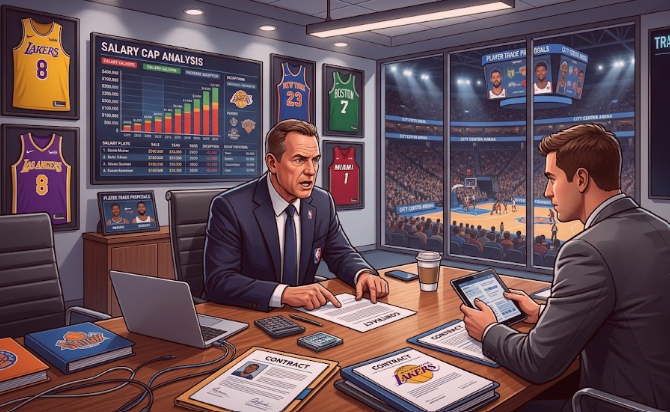
The NBA salary cap is one of the most important aspects of free agency.
Each team adheres to strict fiscal regulations that dictate their spending capacity for salaries.
Due to such restrictions, each team has to strategically plan all the signings.
Even when a team wishes to sign more than one superstar, the salary cap could restrict the team.
For such teams to compete, front offices have to balance:
- Superstars’ contracts
- Vets’ salaries
- Rookies’ salaries
- Bench depth
- Future salary cap space
To learn more about these financial rules, read our NBA Salary Cap Explained guide for a detailed breakdown of how teams manage player salaries.
Why Is NBA Free Agency So Interesting?
There aren’t many offseason happenings that create the kind of buzz like NBA Free Agency.
This is something fans pay close attention to since the signing of a single player may change everything in the league.
Reasons for the interest in NBA Free Agency are:
- Star athletes switching teams.
- Competitive teams upgrading their lineups.
- Building teams signing young veterans.
- Unexpected extensions.
- Sign-and-trade maneuvers.
- Cap management.
Days after free agency opens are some of the busiest in the entire NBA calendar.
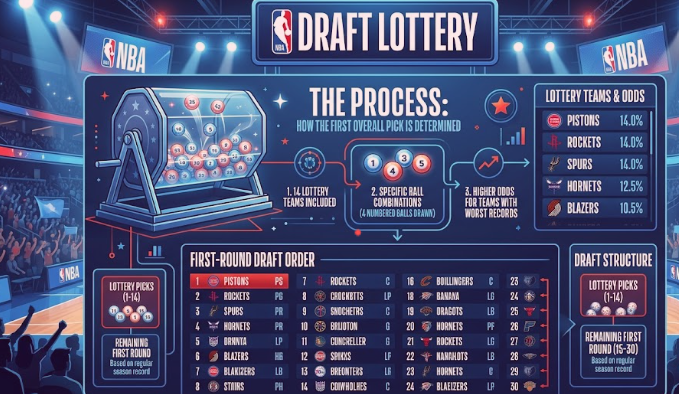
NBA Free Agency vs. NBA Draft
Although both help teams improve their rosters, they serve very different purposes.
| NBA Free Agency | NBA Draft |
|---|---|
| Experienced players sign new contracts | Teams select eligible young players |
| Players negotiate with teams | Teams choose players in draft order |
| Happens every offseason | Held once each year before free agency |
| Contracts are negotiated | Rookie contracts follow league rules |
| Focuses on proven talent | Focuses on future potential |
Successful NBA franchises typically combine smart drafting with strategic free-agent signings.
FAQ
What is NBA Free Agency?
It is the time during the offseason when players have an opportunity to sign up with NBA teams.
What is the difference between unrestricted and restricted free agents?
While unrestricted free agents can sign up with any team, restricted free agents can negotiate with other teams, but their team has the right to match the contract and retain the player.
Can NBA players sign with any team during free agency?
They can, but not all players have full freedom to sign with whatever team they want.
Unrestricted free agents usually have unlimited options, but salary cap restrictions can affect the process.
Restricted free agents do not have much freedom since their team retains the right to match the offer.
What is a sign-and-trade?
It is the situation when a team resigns a free agent and trades him or her to some other team for players or draft picks.
Why is the salary cap important during free agency?
The salary cap limits how much teams can spend on player salaries, helping maintain competitive balance across the NBA.
Concluding Remarks
The NBA Free Agency period is arguably one of the most entertaining aspects of the basketball calendar. Every year, teams assess themselves, sign and trade players, and make other decisions that may determine the fate of the club in the coming years.
Knowing the classification of free agents, how the salary cap works, how sign-and-trades work, and the process of the NBA Free Agency period makes it easier to comprehend the information related to offseason news and signings.
If your favorite team signs another star or re-signs their franchise player or brings in some quality players, remember that the championships are often made well before the regular season starts.
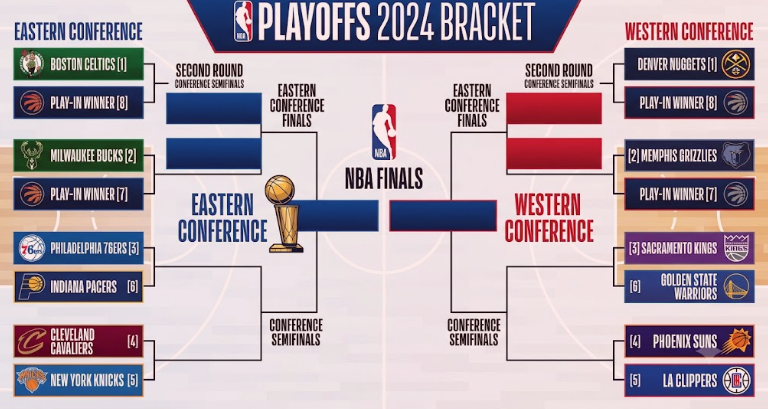
Curious about how the season ends after teams build their rosters? Explore our How the NBA Playoffs Work guide to see how teams compete for the NBA championship.